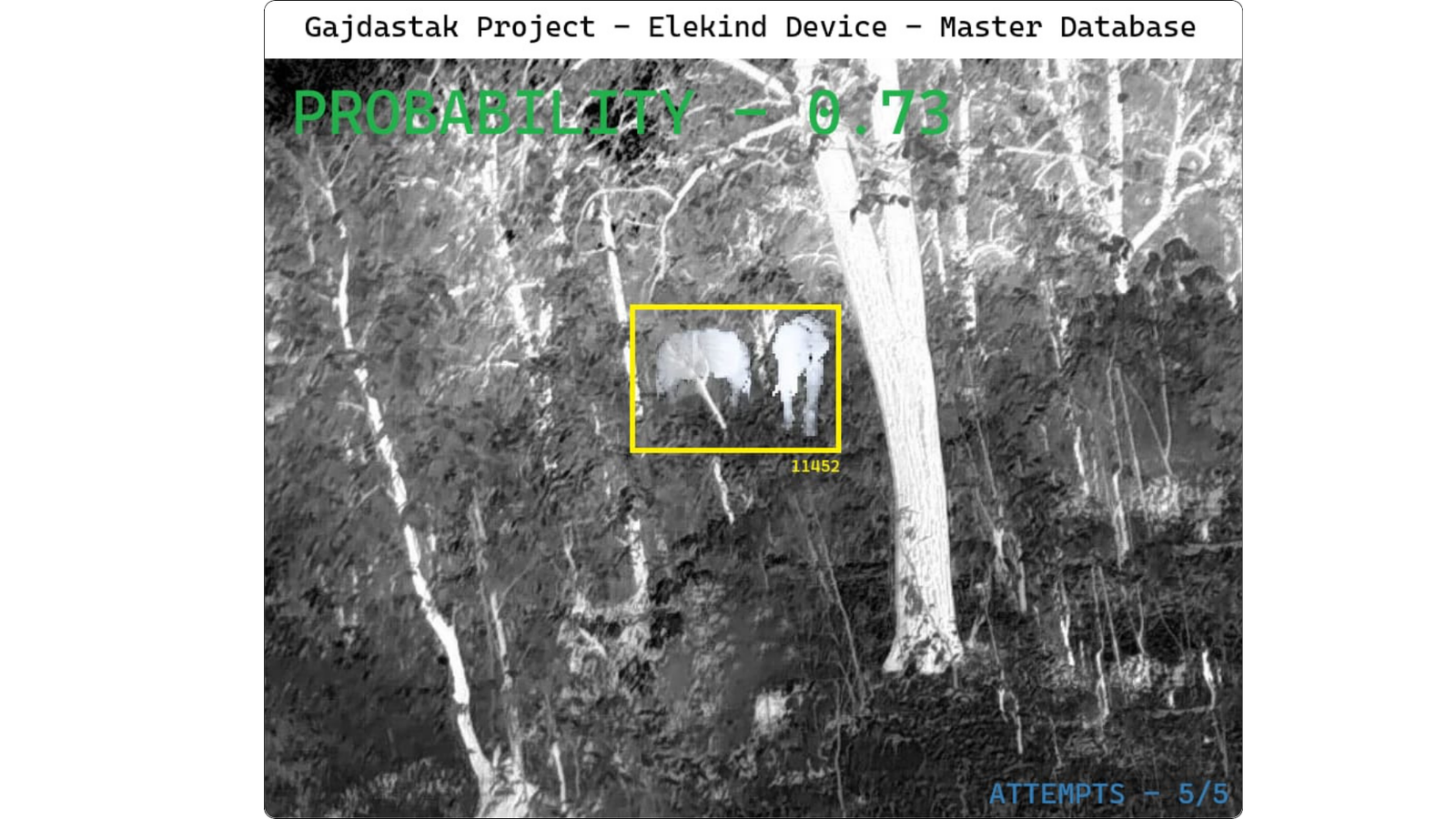
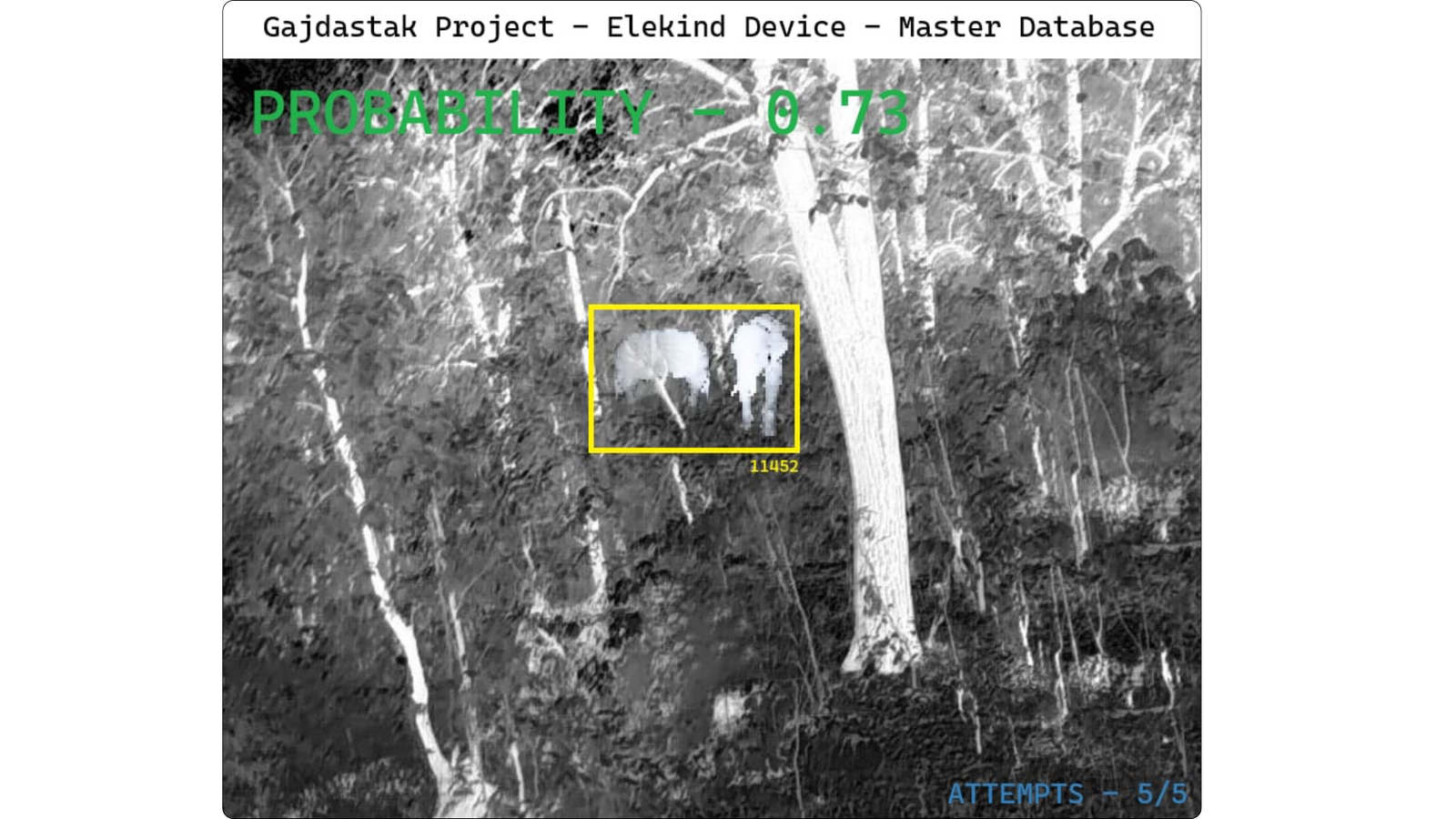
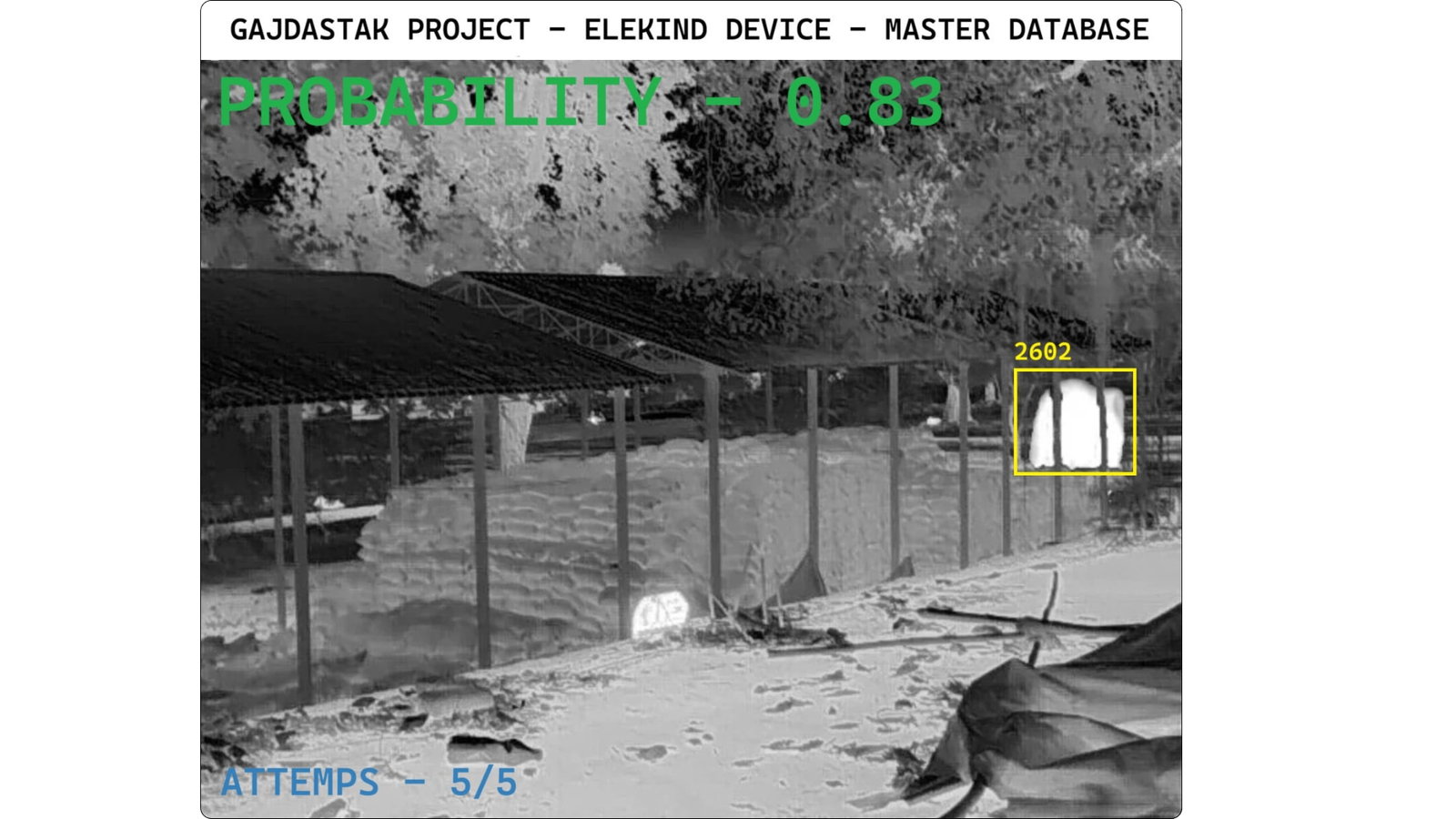
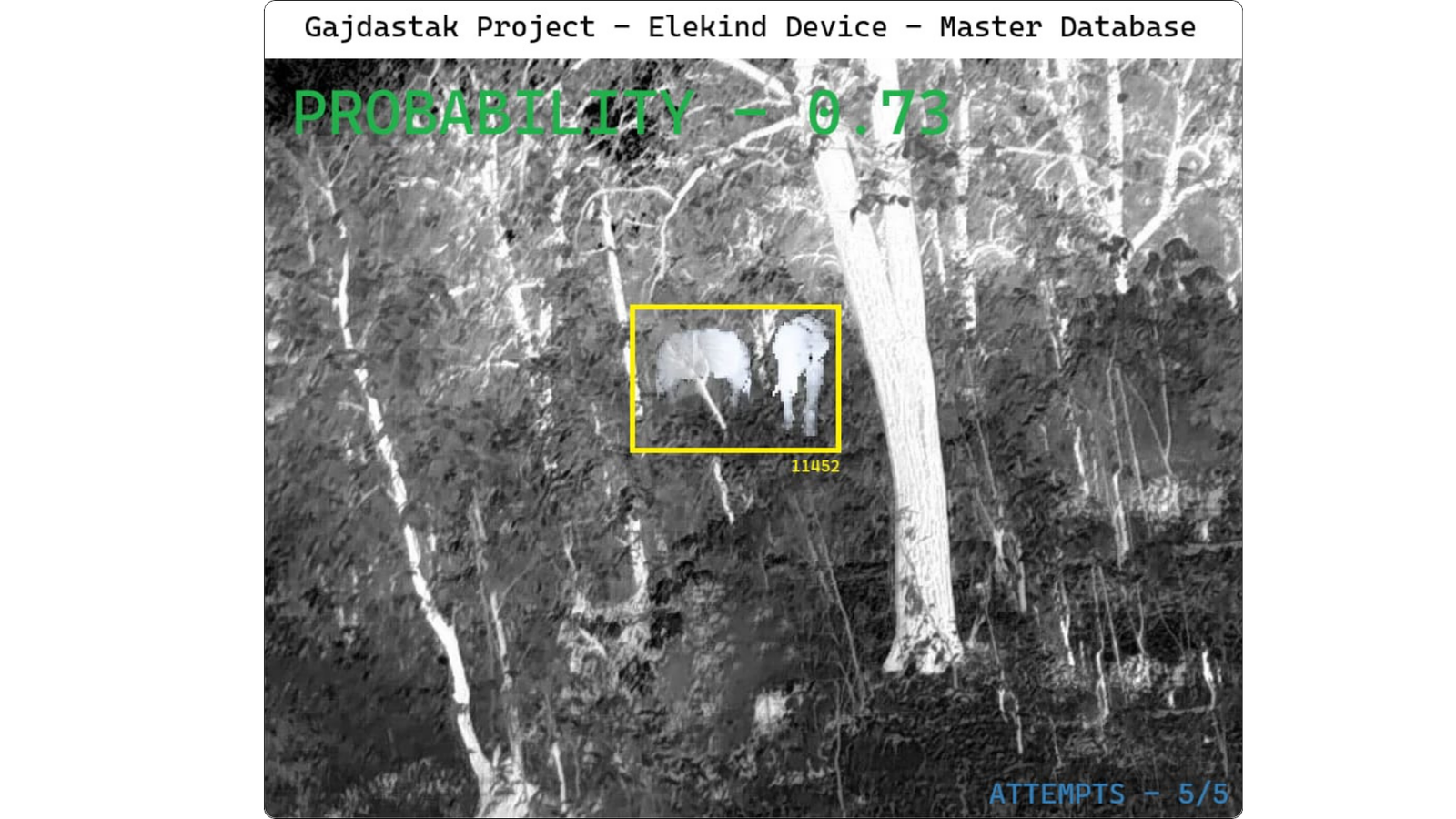
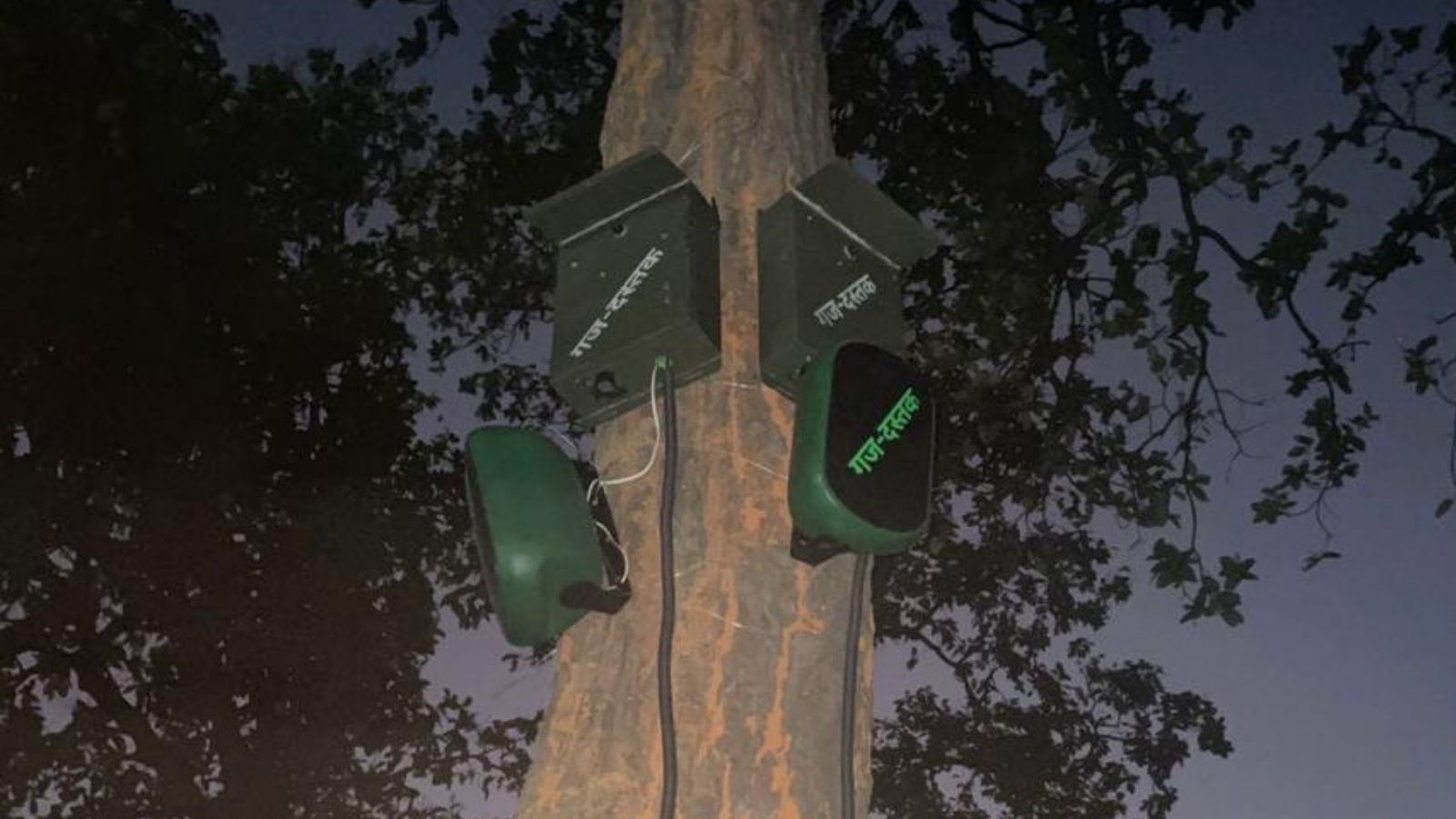
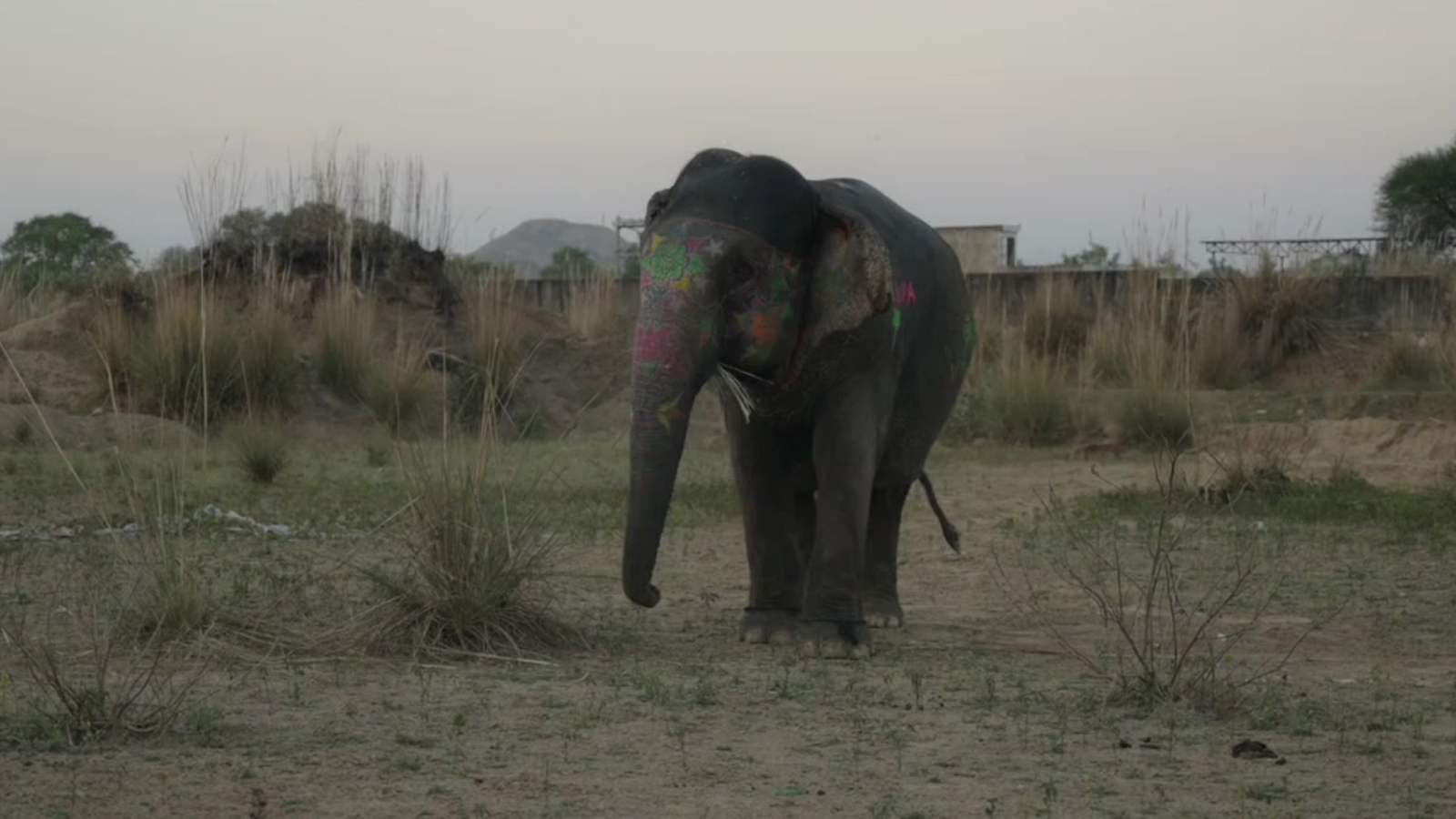
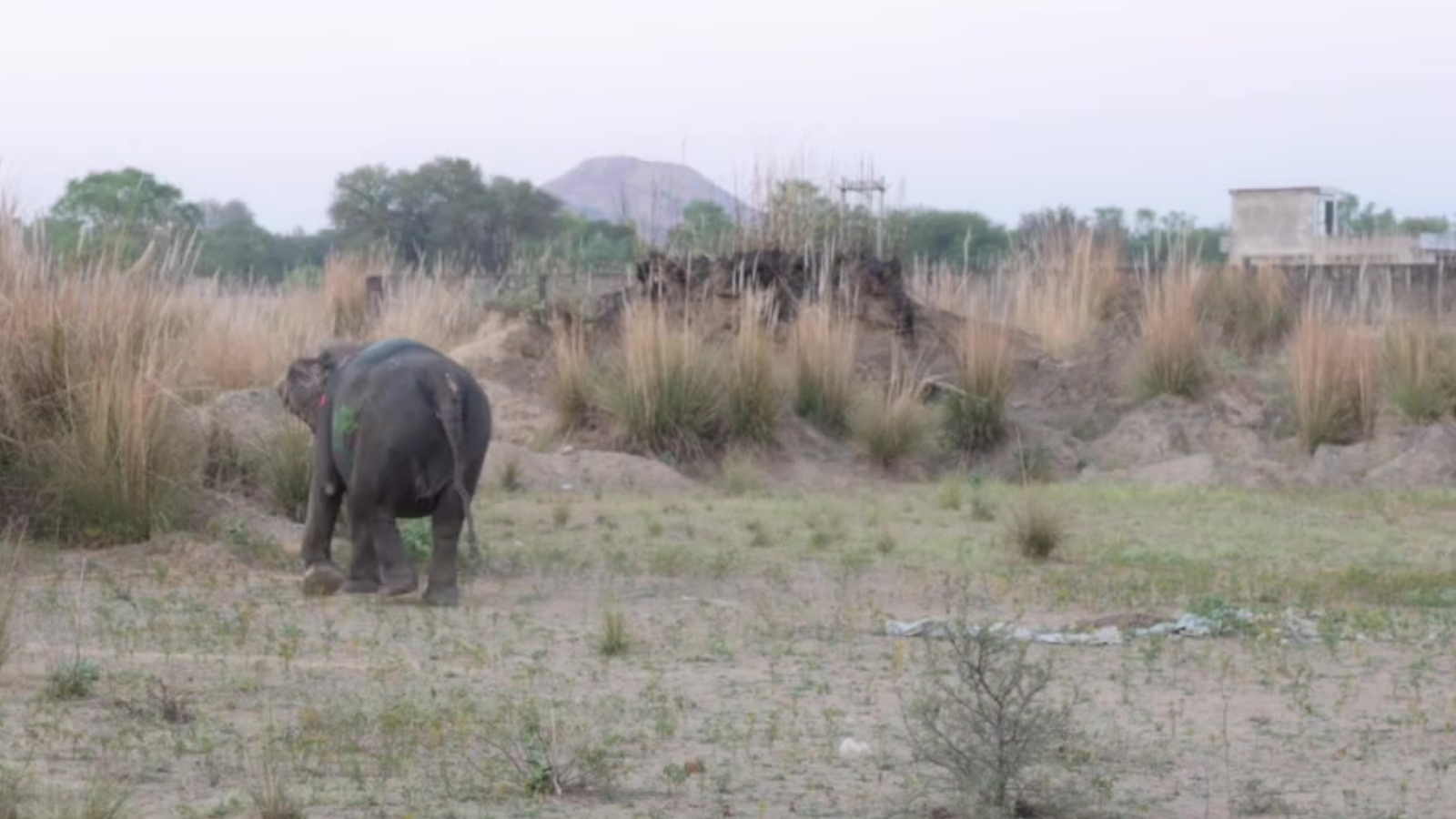
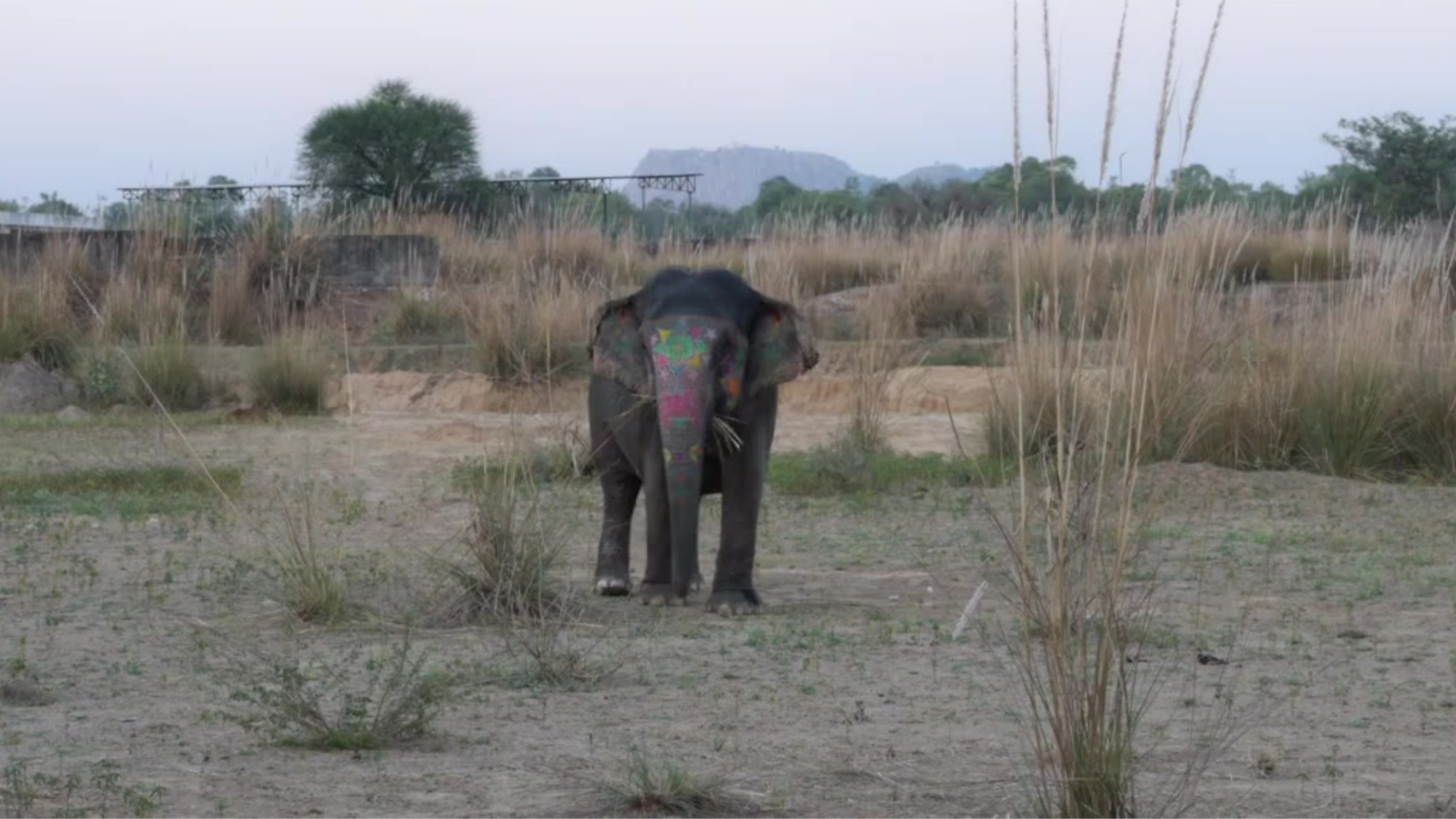
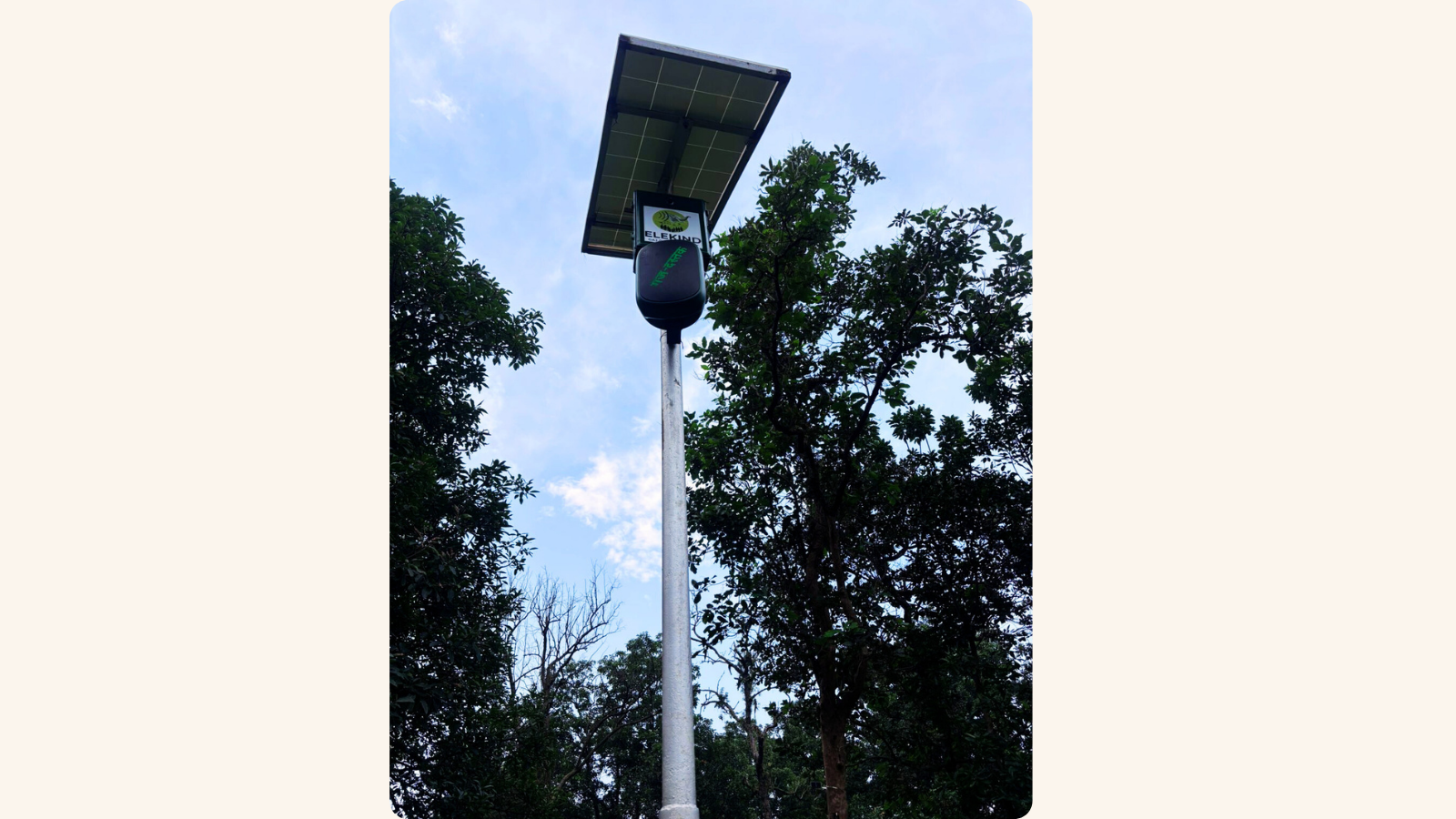
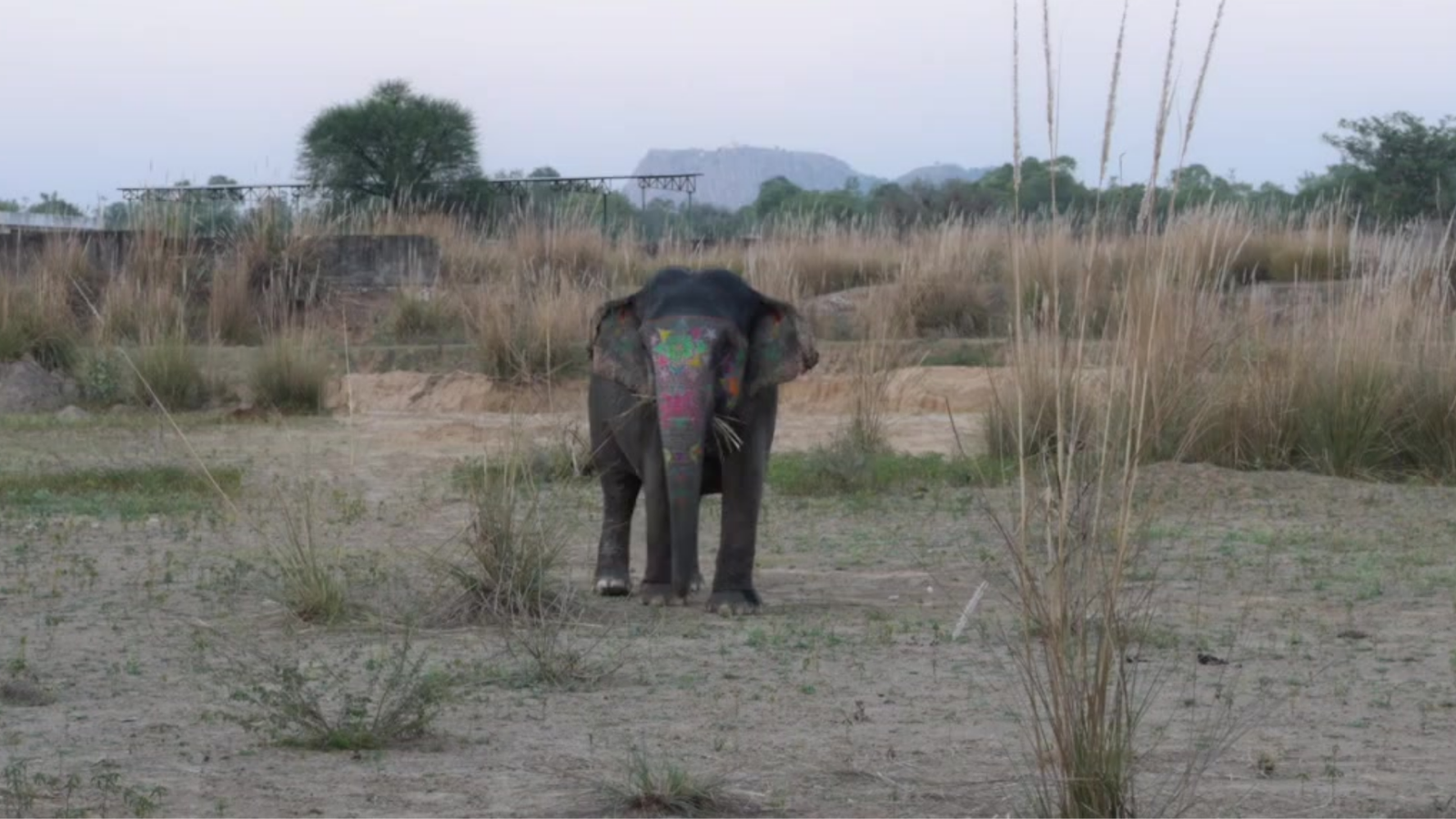
Real-time AI inference on thermal camera feed. The system identifies elephants and generates probability scores entirely on-device, with zero cloud dependency.
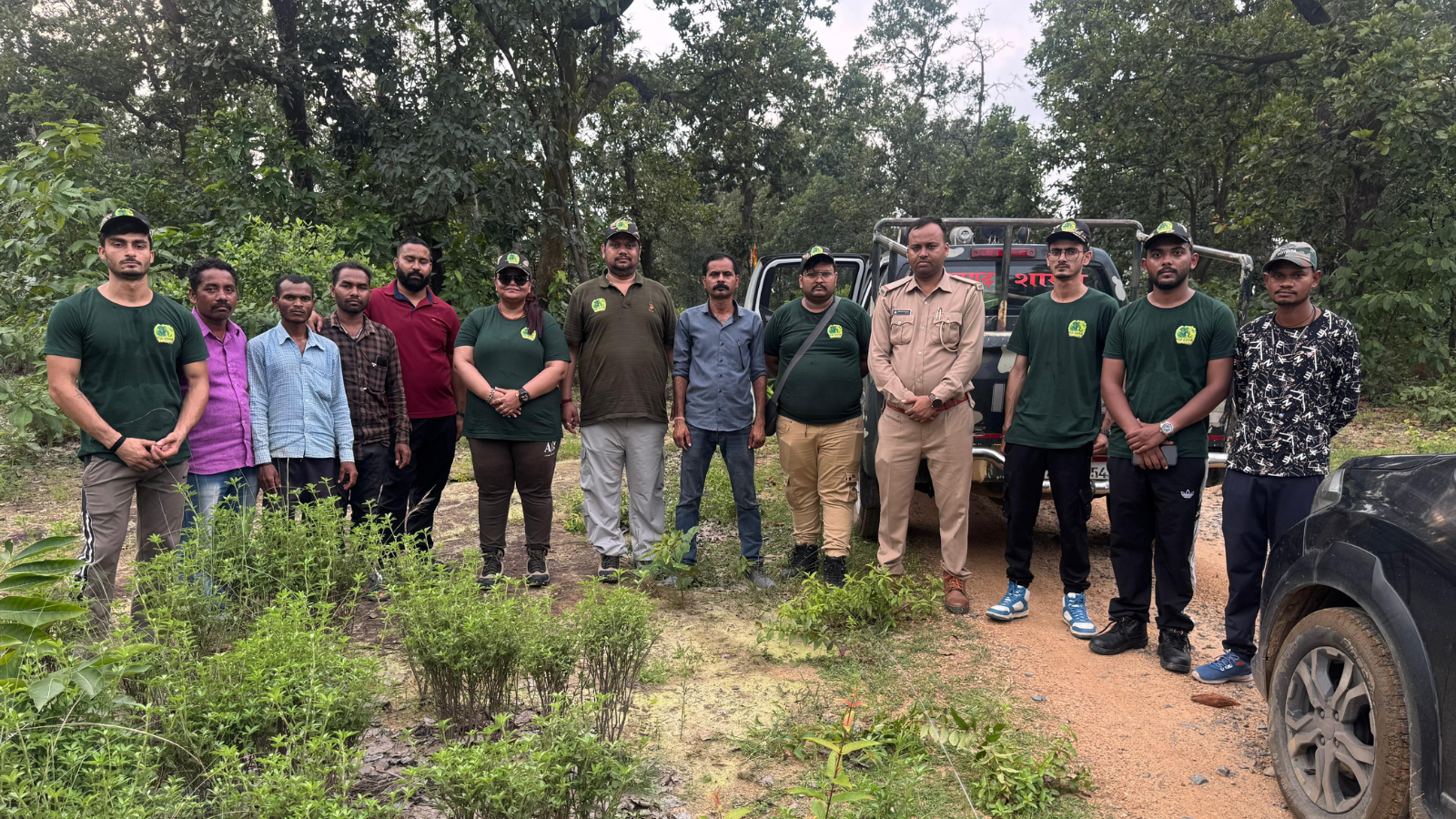
From first proof of concept to government-approved CAMPA procurement — the journey of field validation.
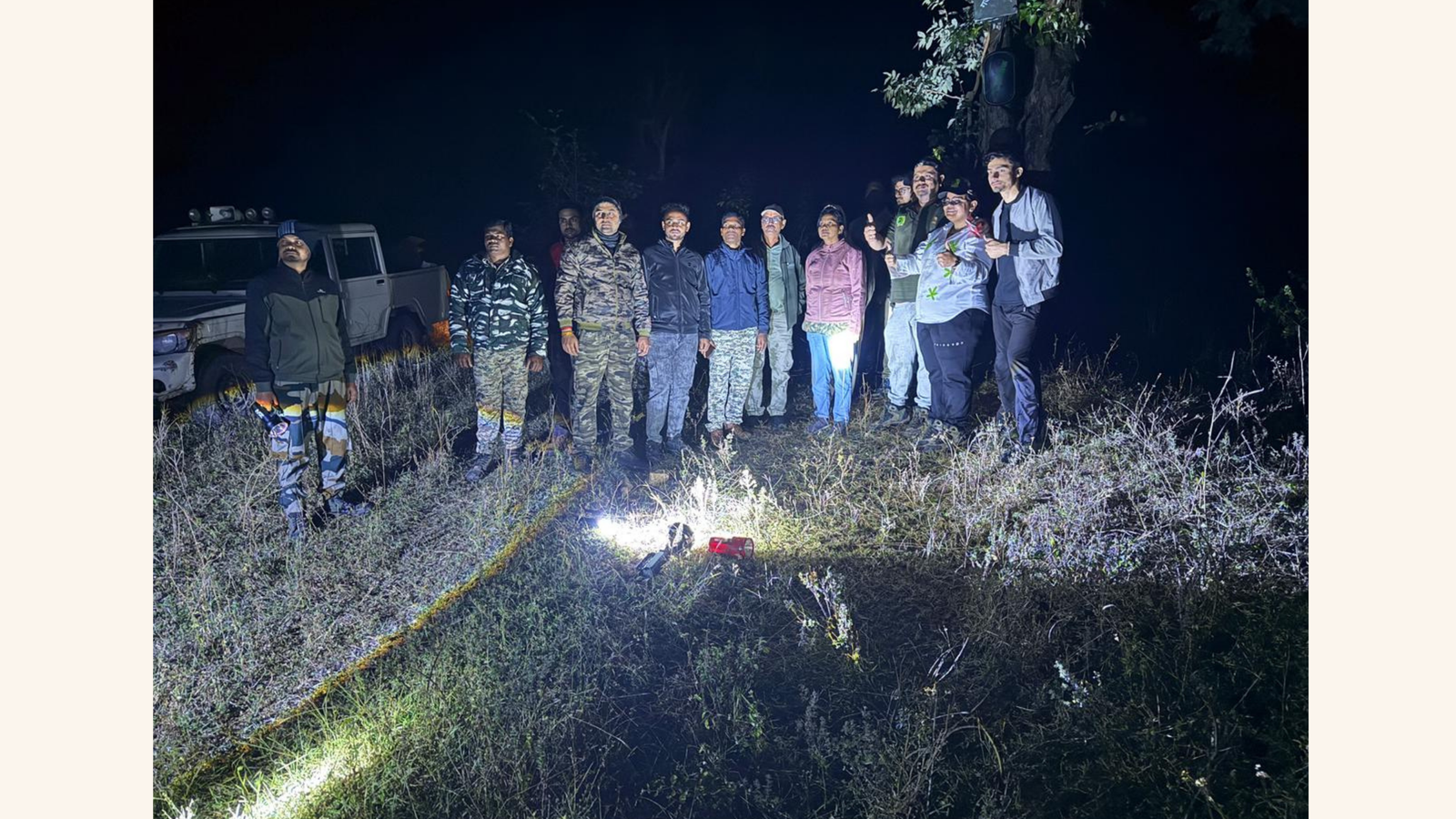
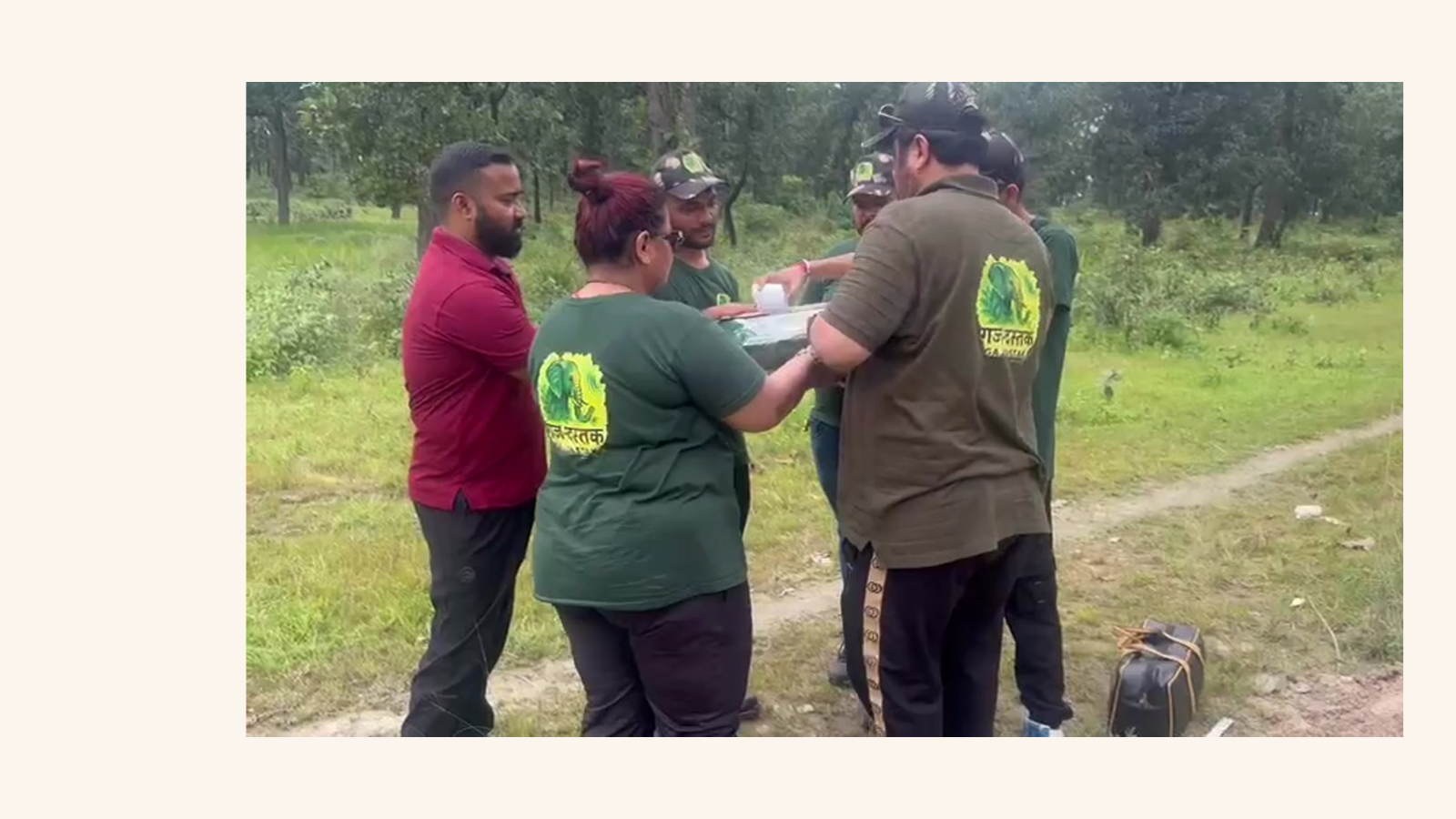
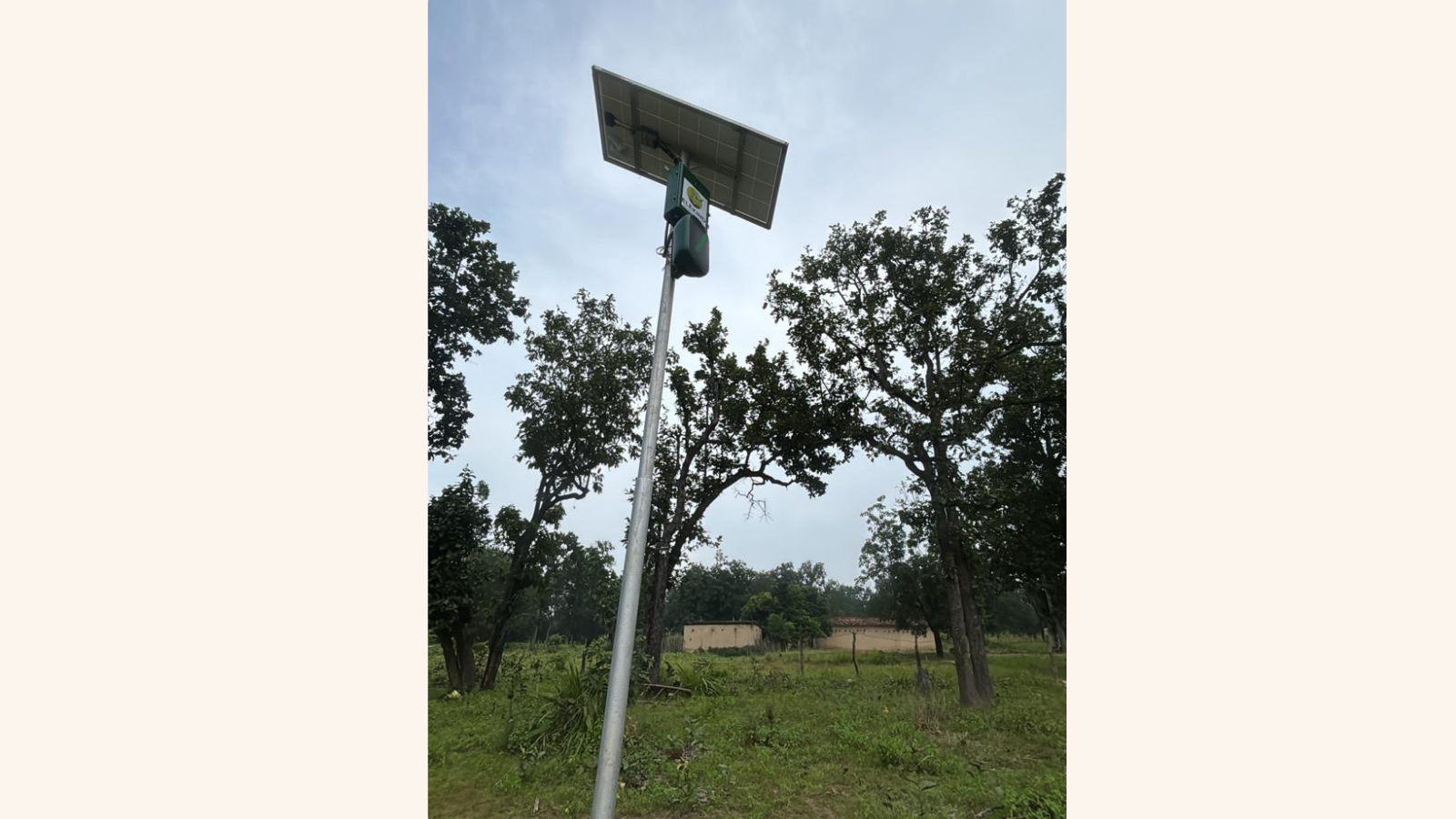
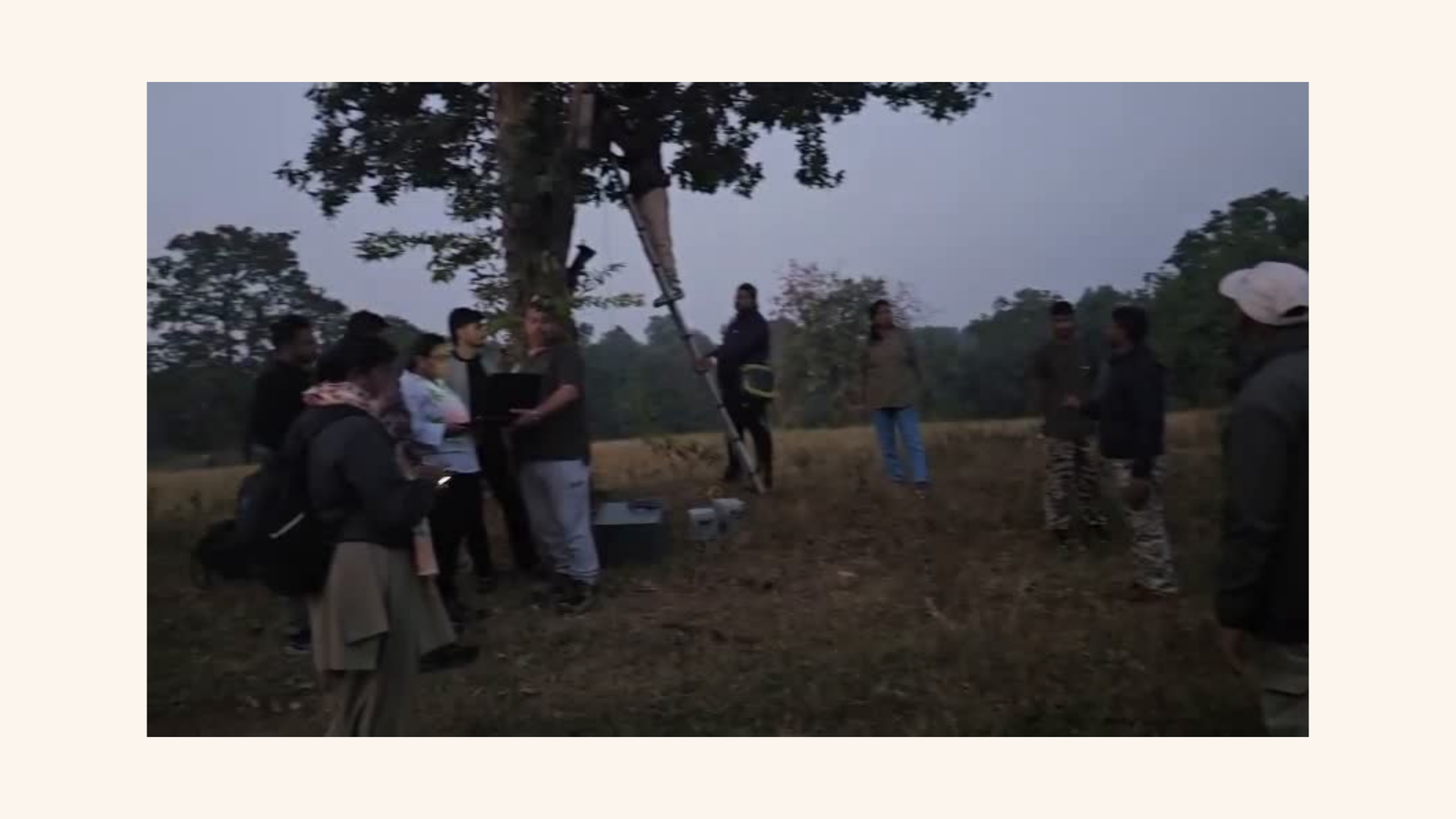
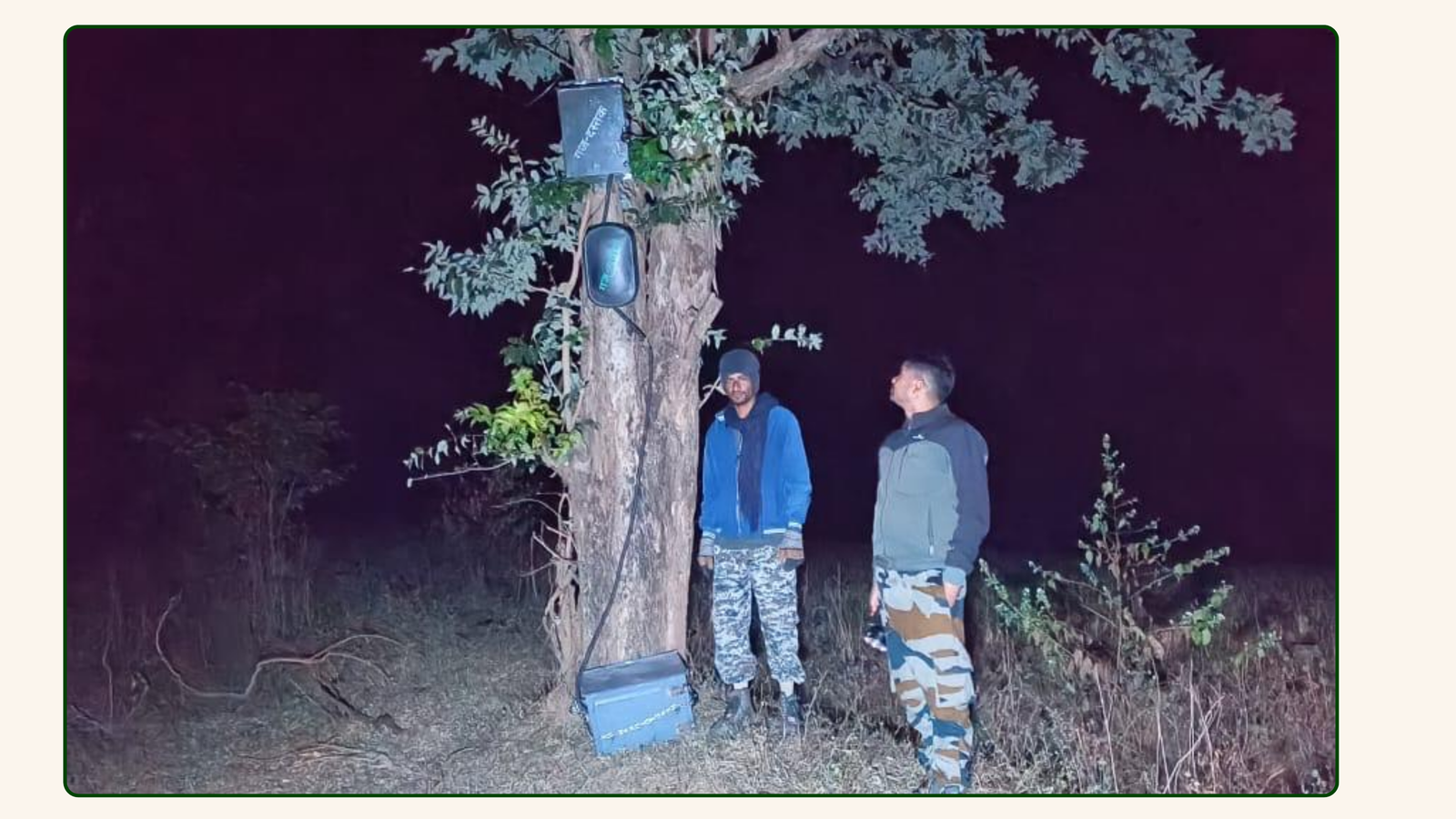
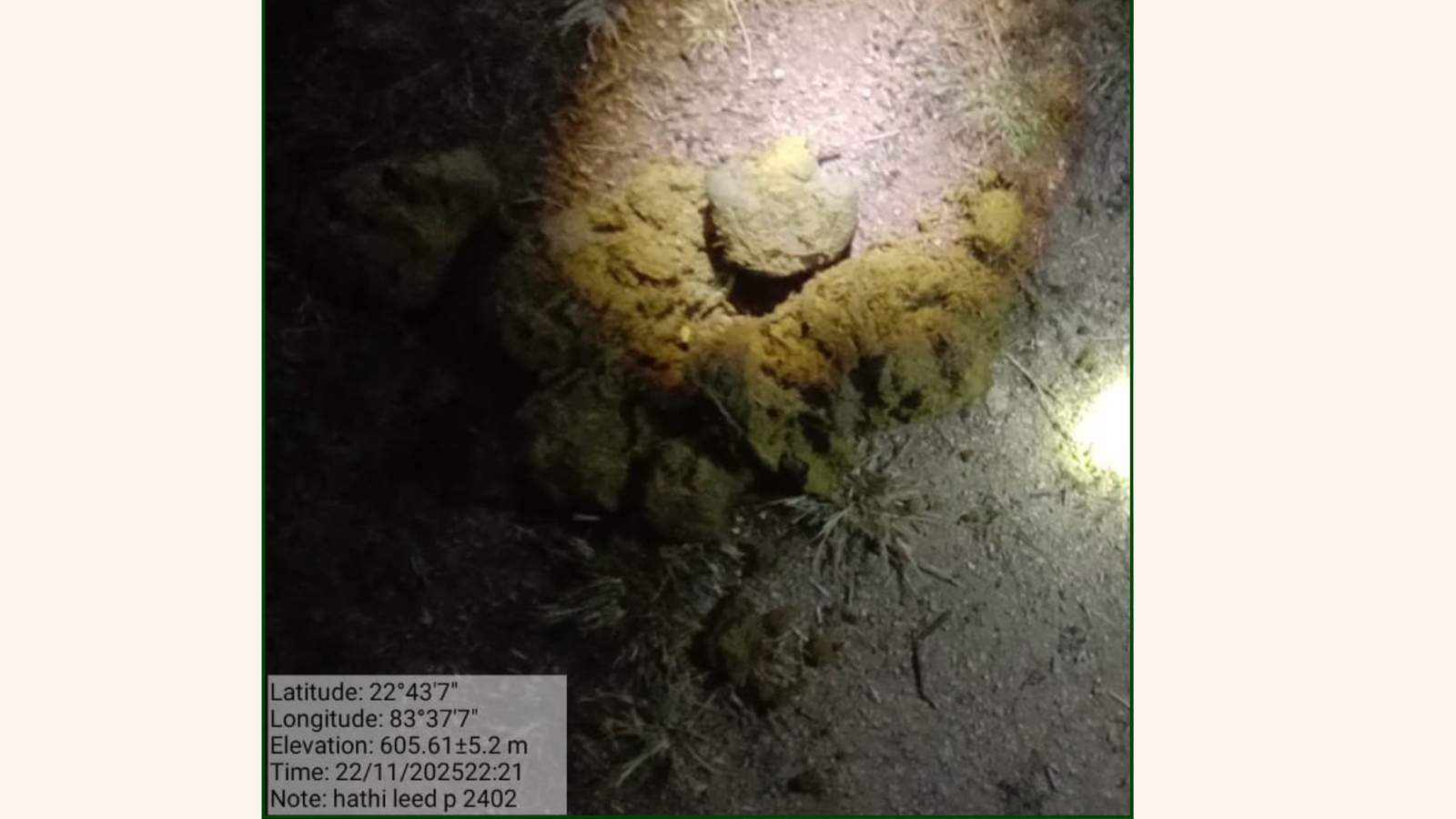
First field deployment of the GAJ-DASTAK thermal detection system under DFO Kumar Nishant (IFS, 2016 batch). Validated core thermal detection capability in real forest-edge conditions with live elephant movement. Confirmed that the military-grade thermal sensor could reliably capture elephant thermal signatures at operational distances.
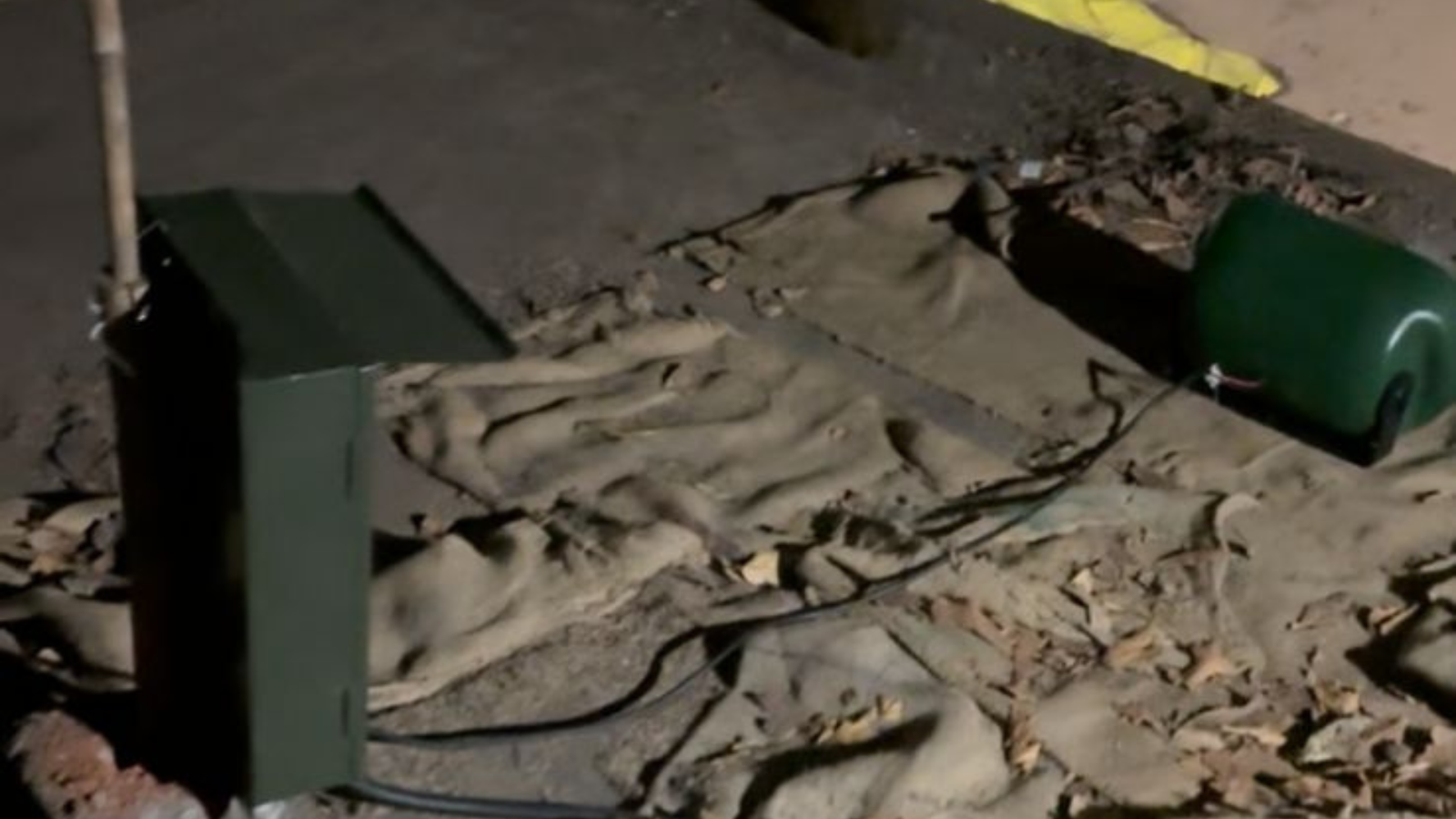
Extended autonomous deployment over multiple weeks under DFO Shashi Kumar (IFS). Validated 24/7 operation with solar power and remote monitoring. First acoustic deterrence field test conducted. A confirmed tampering incident occurred — external wiring was cut by human interference (not animal damage). This critical finding led to a complete redesign: all cable routing moved internal to the sealed enclosure.
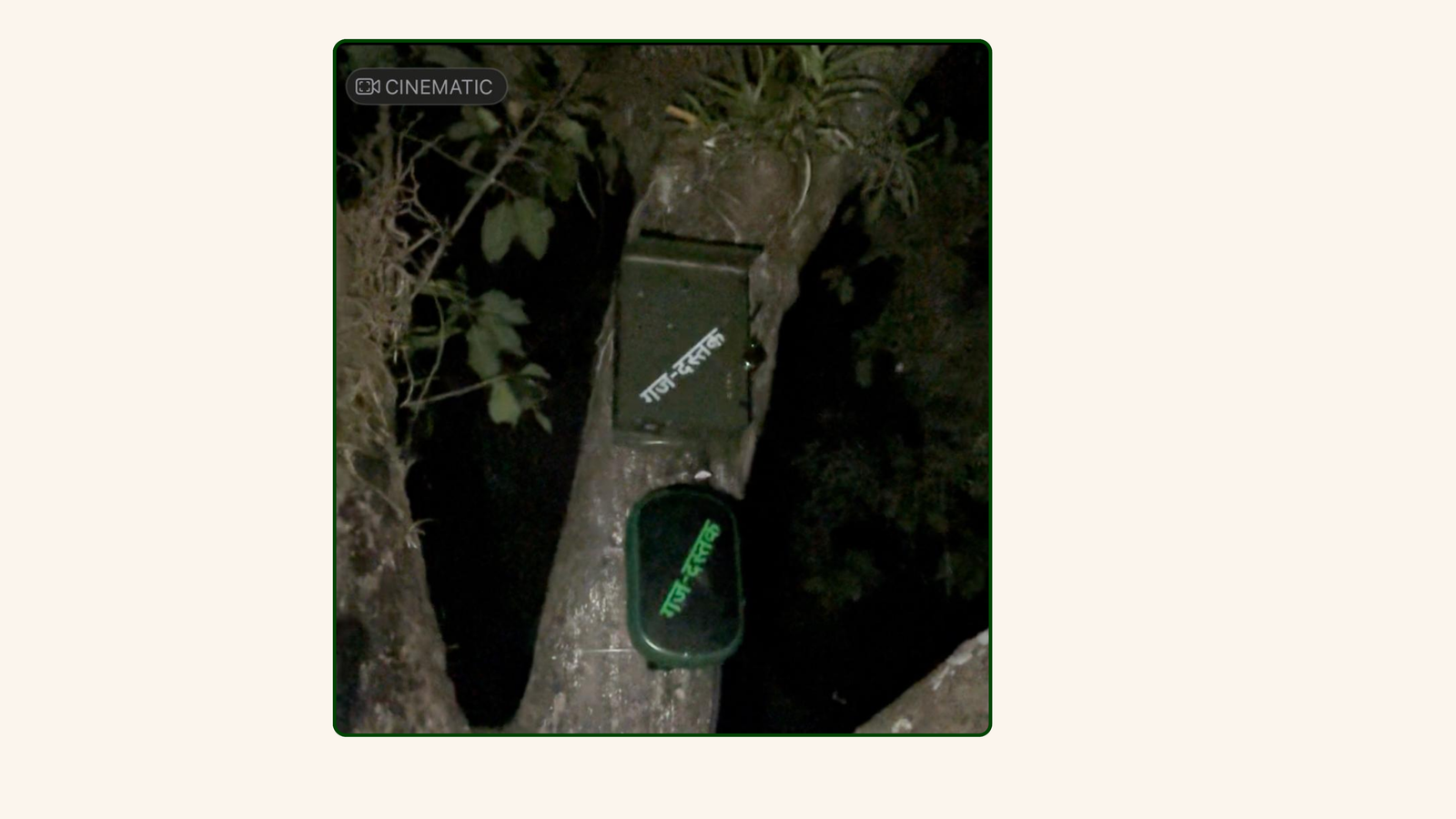
Model retrained on LWIR thermal camera-specific data to close domain gap. Enclosure redesigned with internal cable routing and tamper-resistant construction. Power system optimized for sustained off-grid operation. Thermal drift mitigation implemented with periodic camera restart cycles.
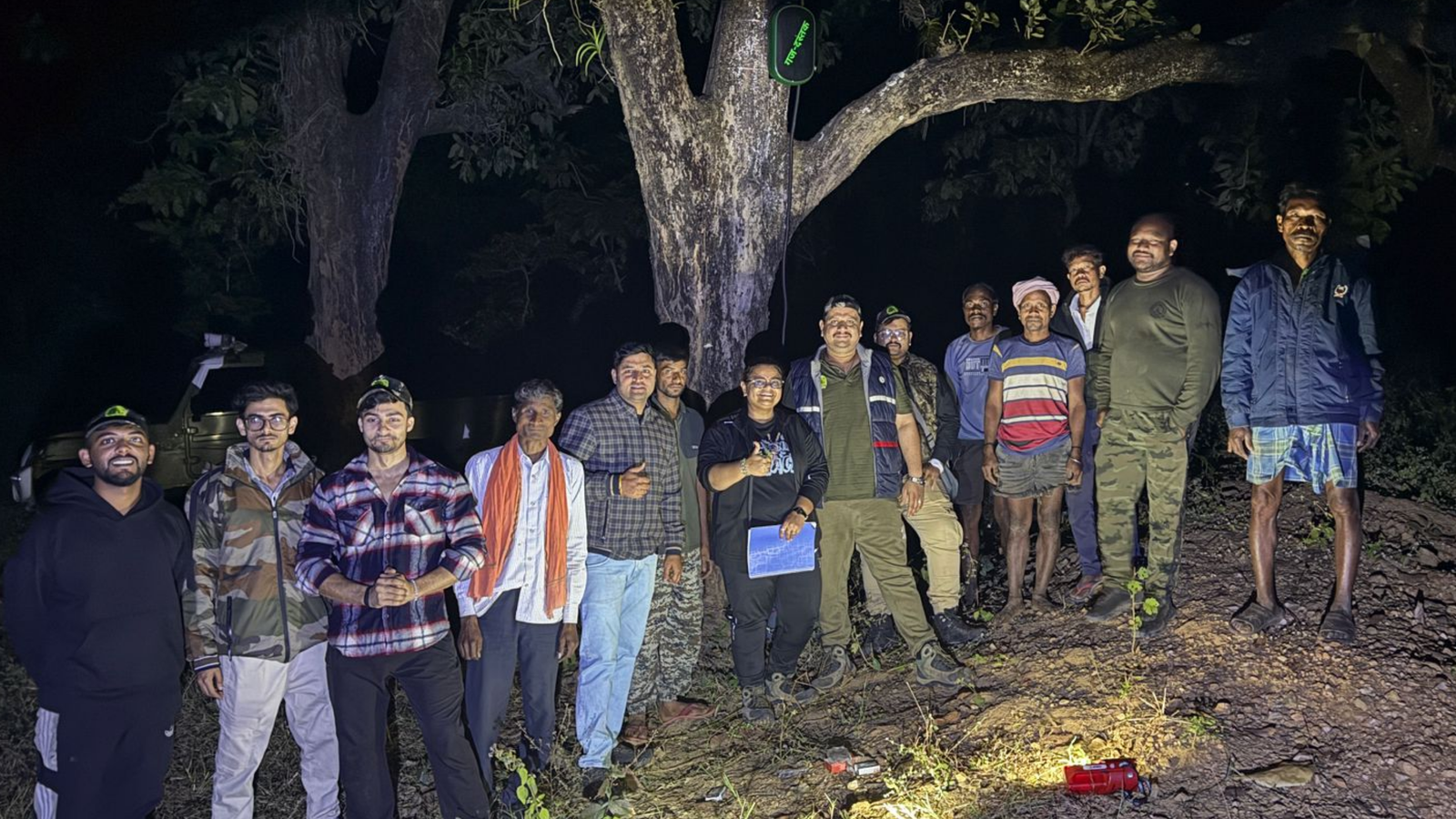
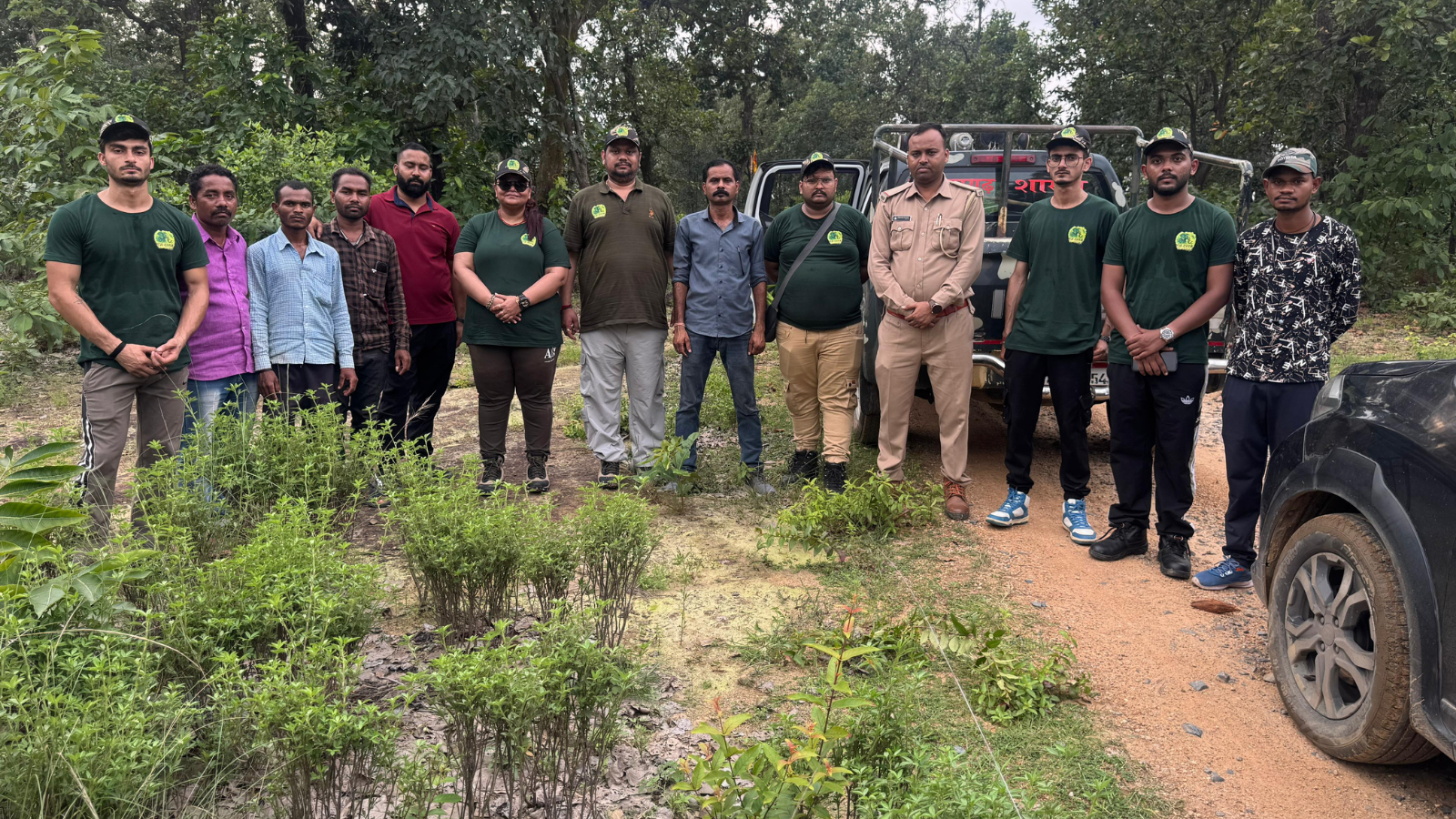
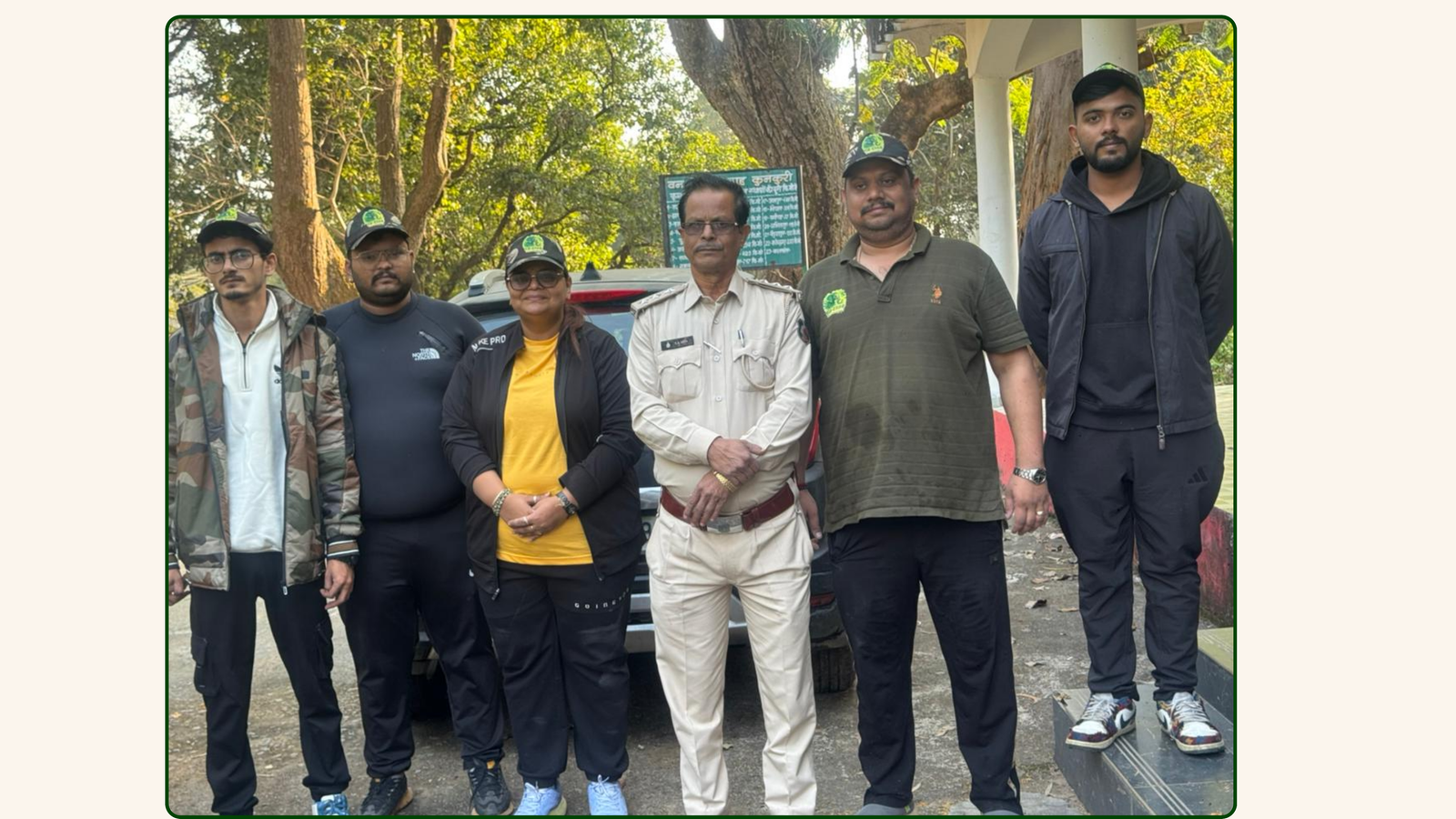
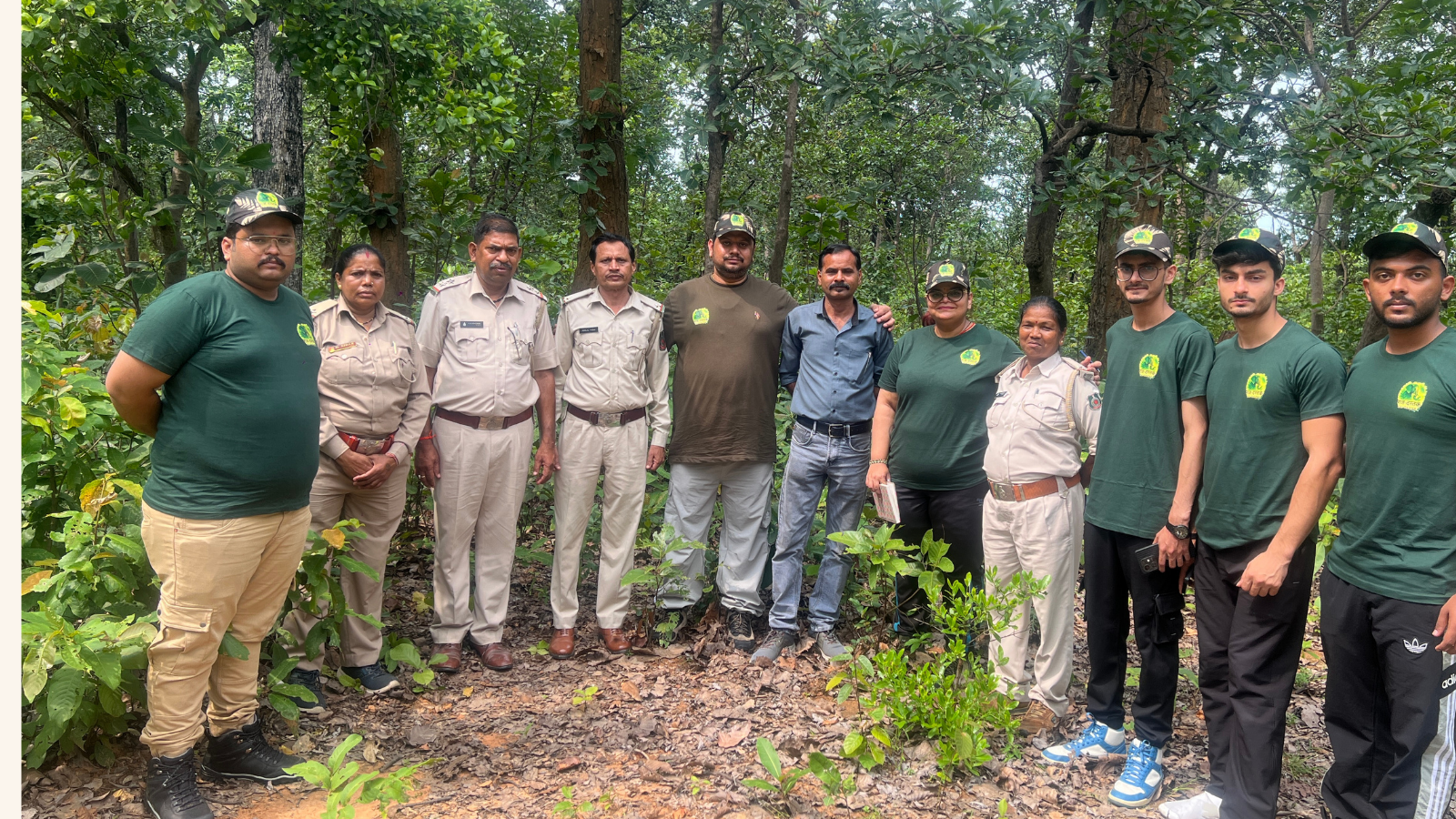
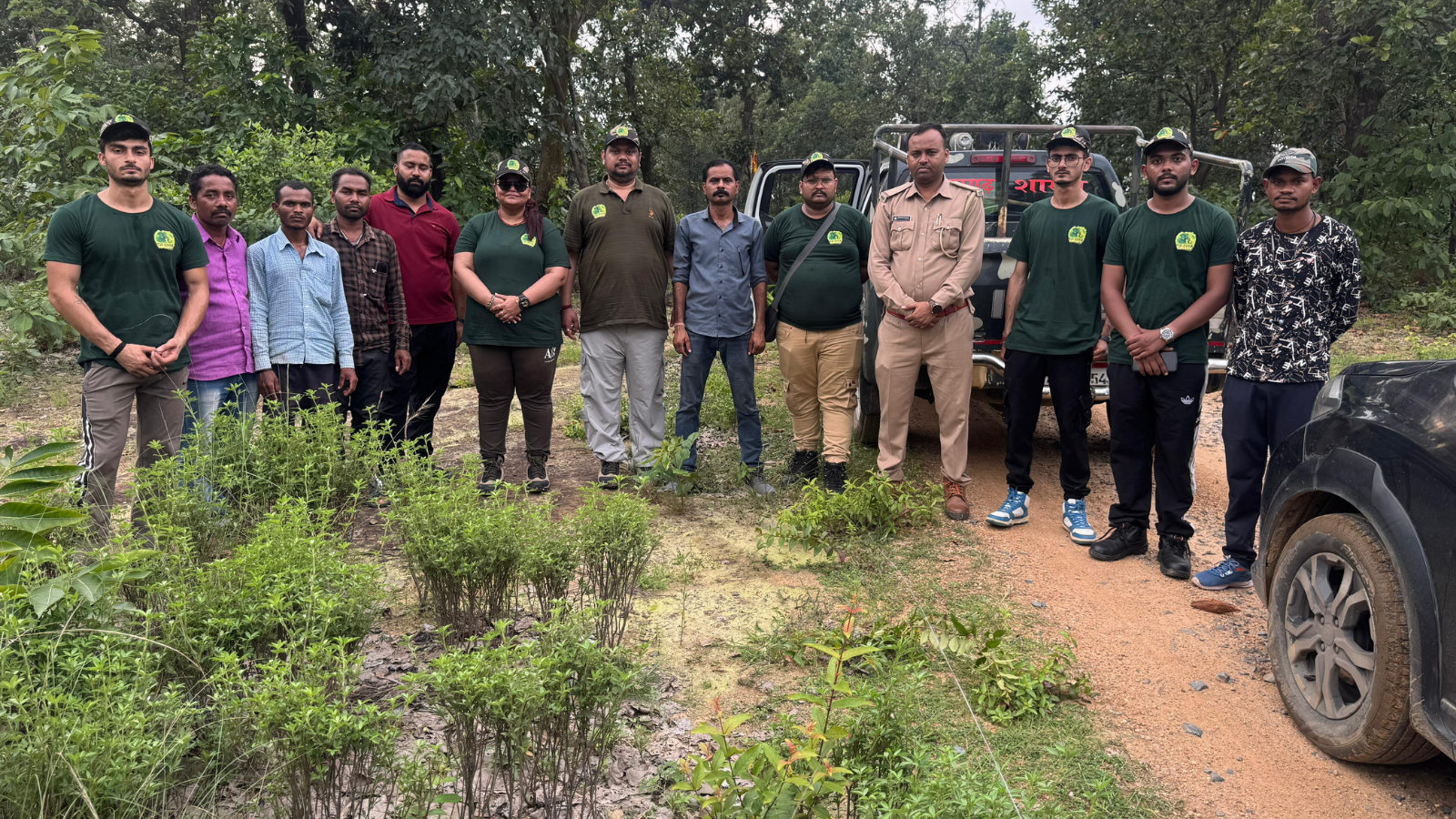
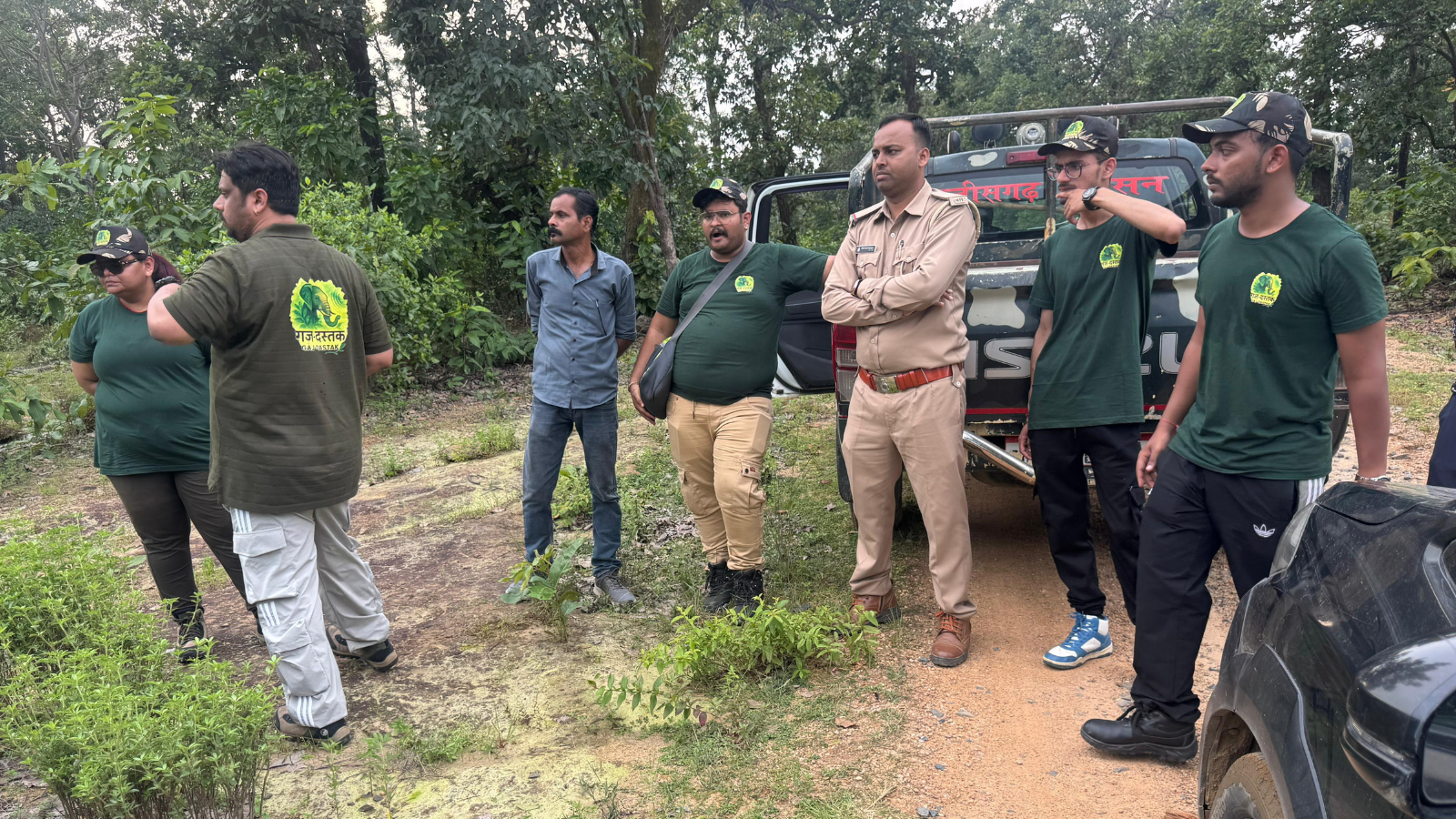
Full government demonstration deployment at Bangursia site under DFO Arvind P.M. (IFS, 2015 batch) — a known high-conflict elephant corridor. Zero crop loss recorded during the entire deployment period. Official validation letter issued by the Forest Department. CAMPA funds allocated for production units.
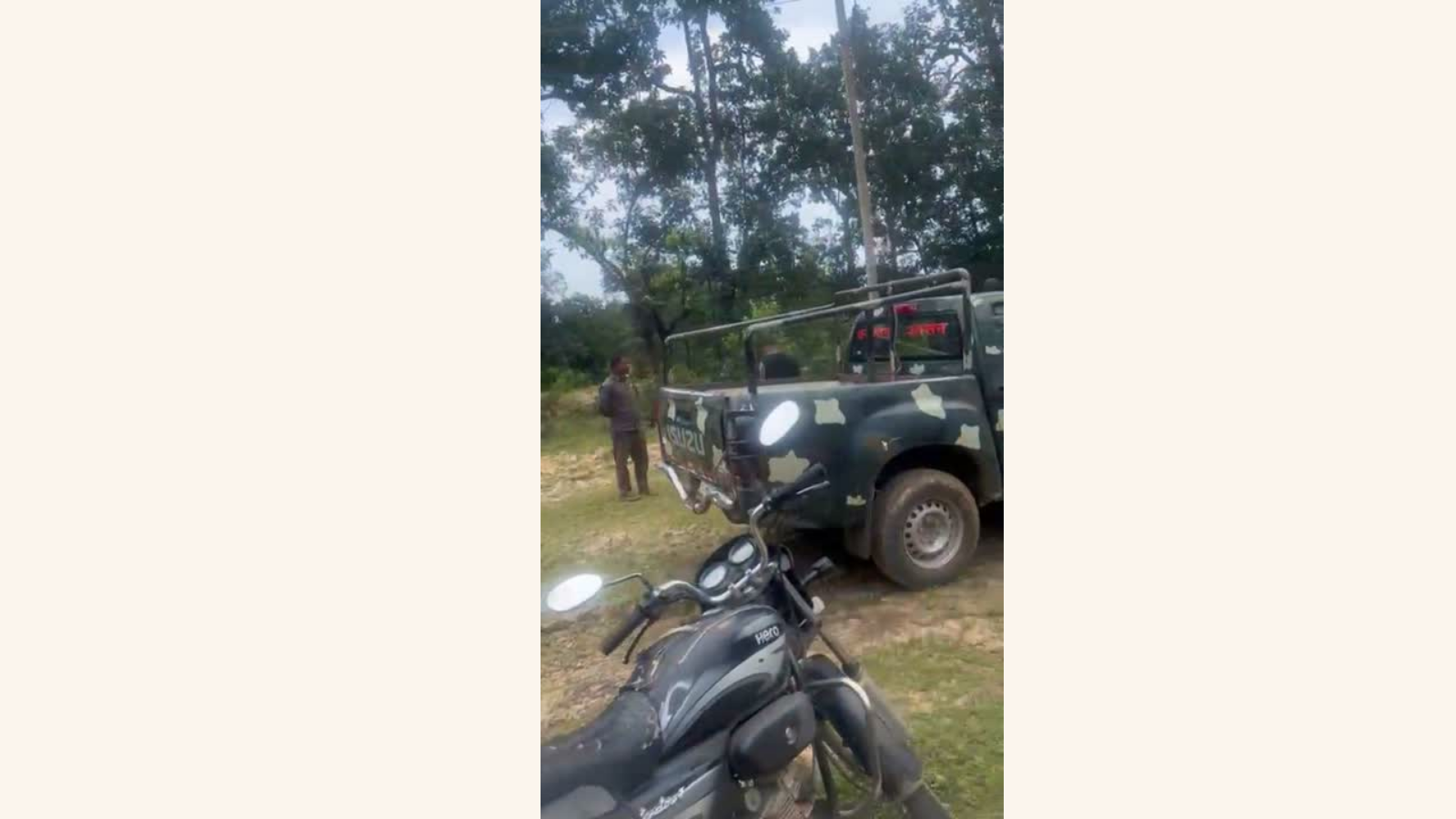
Development of Tier-2 mobile patrol configuration for vehicle-mounted deployment on forest department patrol vehicles. Dual-sensor architecture (thermal + RGB), vibration-hardened mounting, and real-time scanning capability for patrol routes along known elephant corridors.
The extended Jashpur deployment produced critical findings that shaped every subsequent design decision.
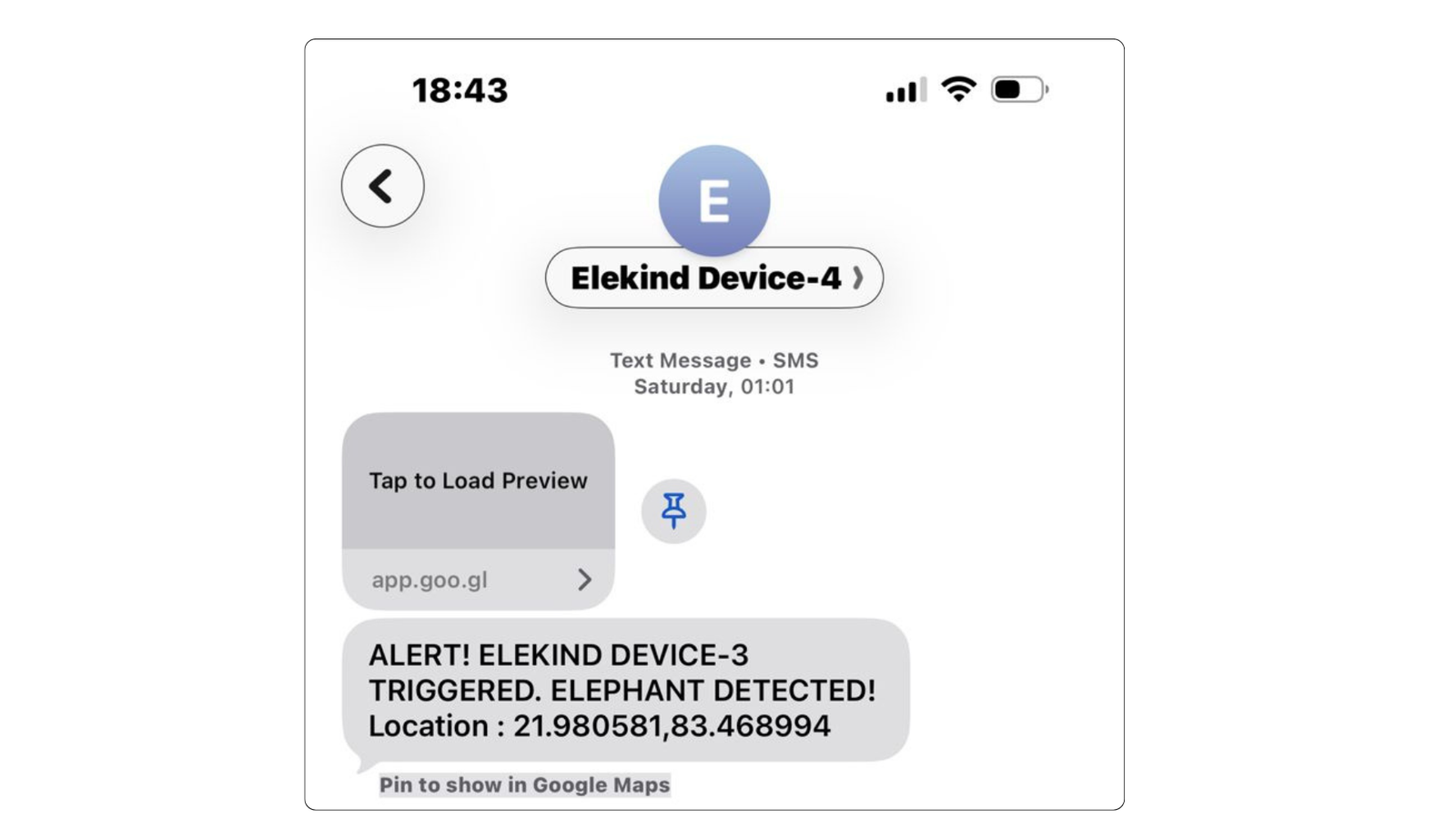
The system operated continuously for multiple weeks without human intervention. Solar charging sustained the power system through variable weather. Remote monitoring via Cellular connectivity confirmed device health and alert status throughout the deployment.
Solar panel + battery architecture proved sufficient for continuous 24/7 operation in Chhattisgarh conditions. Power budget validated: AI processing system + thermal sensor + communications module sustained within solar charge capacity even during monsoon-season cloud cover.
External wiring was selectively cut during deployment. Analysis confirmed human interference, not animal damage — wires were cleanly disconnected with no structural deformation to the enclosure. This incident directly led to the most significant design change in GAJ-DASTAK history: all cable routing moved internal to the sealed enclosure. No external wiring runs permitted in any subsequent design.
The Jashpur deployment established several enduring design rules: internal-only cable routing, tamper-evident enclosure features, padlock provisions on all housings, event logging for power interruptions (to detect cable cuts), and protected cable junctions. Every GAJ-DASTAK unit built since incorporates these learnings.
Three proven deployment patterns designed around real elephant movement behavior and field-validated operational constraints.
2–3 units deployed in a perimeter arc around a village or crop zone. Units positioned to cover primary elephant approach routes with overlapping detection fields. Acoustic deterrence redirects elephants away from the protected area before they reach crops or habitation.
5+ units with overlapping detection coverage and layered deterrence zones. Designed for areas with frequent, multi-directional elephant incursion. Staggered acoustic deterrence creates a continuous barrier. Eliminates the directional blind zone vulnerability observed in single-unit deployments.
Linear deployment along known elephant movement corridors. Units spaced at detection-range intervals to create a continuous monitoring fence. Ideal for tracking herd movement patterns and providing early warning to downstream villages and agricultural areas.
Key Principle: Single units have directional blind zones. Elephants were observed re-entering from alternate directions after initial deterrence (documented at Raigarh, Day 2). Multi-unit deployment with overlapping coverage eliminates re-entry from alternate directions and prevents habituation through varied acoustic sequences.
From forests to fields — every deployment teaches us something new about coexistence.
Whether you manage a forest division, agricultural cooperative, or conservation zone — we design deployments matched to your terrain, threat patterns, and budget. CAMPA-compliant procurement available.